





Home > Latest News > How to Protect Your Home From Care Fees in 2026?
How to Protect Your Home From Care Fees in 2026?
Date added: 16/06/26
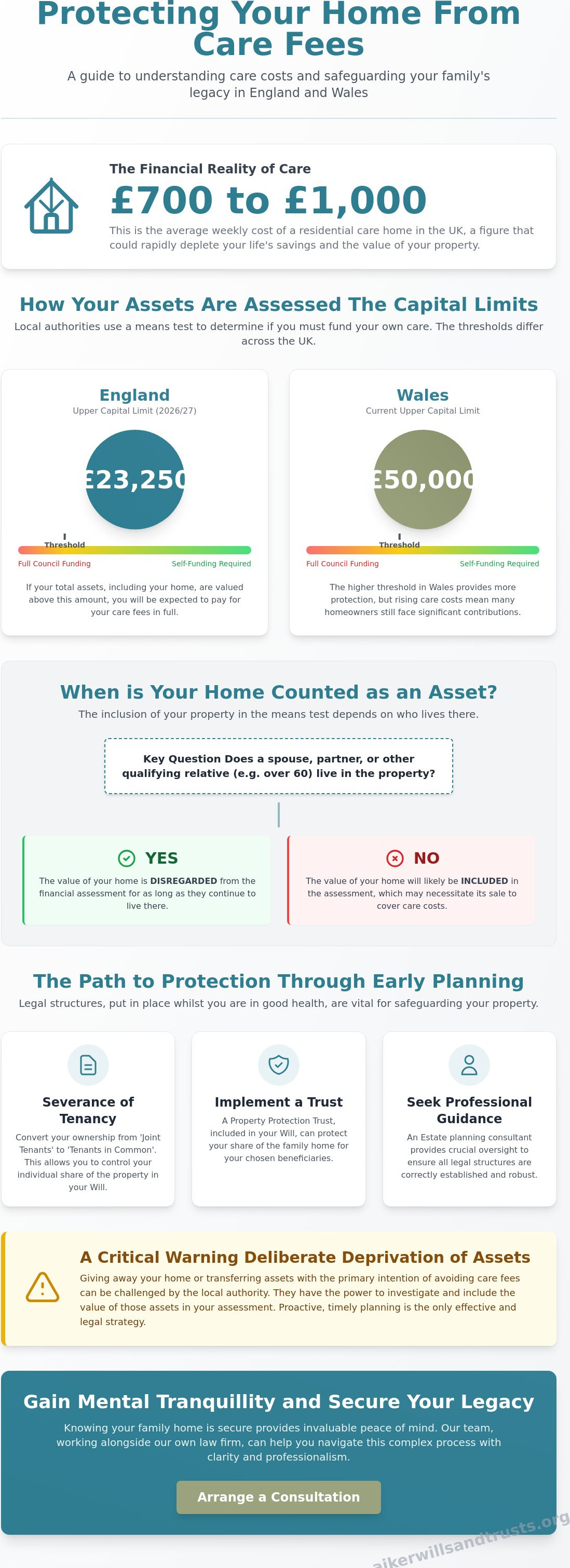
What if the home you have spent decades paying for was no longer yours to pass on? For many, the reality of the 2026 care fee thresholds means that anyone with assets over £23,250 in England must fund their own support, a figure that often leads to the sale of the family property.
It is a deeply unsettling thought that your hard-earned legacy could be exhausted by weekly costs that now average up to £1,000 for residential care. Learning how to protect your home from care fees is not about avoiding responsibility; it is about ensuring that your family’s history and future security remain intact whilst you are still here to decide.
We understand the anxiety that comes with these complex local authority rules, especially since the government's proposed £86,000 cap on costs has been scrapped. You deserve the mental tranquillity that comes with knowing your children will receive their intended inheritance.
In this article, we provide a clear path through the confusion, outlining how an Estate planning consultant can help you implement robust structures like a Property Protection Trust or a Family Asset Protection Trust.
As an organisation that owns its own law firm, we provide a seamless bridge between your family's needs and the professional legal oversight required to secure them. We will explain the current legal landscape for 2026 and show you how to safeguard your home through proactive planning that prioritises your family's achievements.
Key Takeaways
- Understand how the 2026 capital thresholds in England and Wales determine your eligibility for local authority funding and the impact on your property.
- Explore how professional trust structures and the severance of joint tenancy can help you protect your home from care fees whilst ensuring your property remains within the family.
- Learn the legal boundaries of asset transfers to avoid the common pitfalls and investigations associated with the deliberate deprivation of assets.
- Discover the importance of early planning to safeguard your legacy before care needs become foreseeable or urgent.
- Identify how an Estate planning consultant provides the professional oversight and clarity needed to navigate complex local authority means tests.
Table of Contents
- Understanding the financial impact of care fees on your home
- How the Local Authority assesses your property and assets
- Effective legal structures to safeguard your family home
- Avoiding the pitfalls of deliberate deprivation of assets
- Taking proactive steps with an estate planning consultant
If you would like to speak with a professional about your specific circumstances, please visit our contact us to arrange a consultation.
Understanding the financial impact of care fees on your home
A home is far more than just bricks and mortar; it is a repository of a lifetime of memories and a symbol of your hard work. Finding effective ways to protect the home from care fees has become a necessity for many families who wish to see their achievements benefit the next generation.
When an individual requires residential support, the local authority conducts a detailed financial assessment to determine how much that person should contribute. If your total capital, which usually includes the value of your property, exceeds certain limits, you are expected to meet these costs yourself.
In England, the upper capital limit for the 2026/27 financial year is £23,250. In Wales, the threshold is currently £24,000. Whilst the Welsh threshold offers slightly more breathing room, the average weekly cost of residential care in the UK now ranges from £1,000 to £1,200. For families in North Wales, these costs have risen steadily over the last few years, making it increasingly difficult to preserve a family legacy without professional intervention.
Learning how to protect your home from care fees is about more than just numbers; it is about the emotional security of knowing your children will receive their intended inheritance.
Our team works alongside our own law firm to provide a supportive and professional approach to these sensitive topics. We focus on the human element of estate planning, ensuring that the legal strategies we suggest provide both long-term security and mental tranquillity for you and your loved ones.
The current state of social care funding
The landscape of social care funding remains complex and unpredictable. The previously proposed £86,000 cap on care costs has been scrapped, meaning individuals are now responsible for the full extent of their fees if their fees exceed the capital thresholds.
It is vital to distinguish between healthcare provided by the NHS, which is free at the point of use for medical needs, and social care, which covers activities of daily living such as washing and dressing. The Care Act 2014 provides the primary framework for carrying out these assessments in England.
Inflation since 2024 has also further squeezed local authority budgets, often leading to higher private fees for those who do not qualify for state support.
Why your property is at the centre of the assessment
For most people, their property is their most valuable asset. During a means test, the local authority typically includes the value of your home unless a spouse, a partner, or a qualifying relative over the age of 60 still lives there.
This creates an immense psychological burden for families who fear their childhood home must be sold to pay for care. Proactive steps, such as setting up a Protective Will Property Trust, can help safeguard a portion of the home's value for your beneficiaries.
An Estate planning consultant, like us here at Aiker Wills & Trusts, can guide you through these options while you are in good health, ensuring that your intentions are legally documented and your family history is preserved.
To understand how these specific thresholds apply to your family home, you can speak with one of our specialists for a personal consultation.
How the Local Authority assesses your property and assets
The local authority's financial assessment is a thorough audit of your life's work. It is designed to determine your ability to pay for residential care by examining your income, savings, and property. This process can feel intrusive; however, understanding the mechanics of the means test is the first step toward mental tranquillity.
The local authority follows the official government guidance to ensure the assessment is consistent with national standards, whilst taking local variations into account.
Throughout the UK, the assessment reflects the specific Welsh capital threshold of £50,000. If your total assets fall below this amount, the local authority may provide financial support.
For those in England, the rules are more tiered. The upper capital limit is £23,250, and anyone with assets above this must pay their fees in full. It is this specific figure that often makes people look for ways to protect their home from care fees, as property values almost always exceed this limit.
The means test and capital thresholds
The distinction between the upper and lower limits is crucial for your financial planning. In England, the lower limit is £14,250. If your capital is between these two figures, you are expected to contribute a "tariff income" toward your care; this is calculated as £1 per week for every £250 of capital you own.
Assets included in this test usually encompass bank accounts, shares, and the family home. Some assets are disregarded, such as personal possessions and certain types of life insurance, but the property remains the primary focus. An Estate planning consultant can help you navigate these figures to ensure you have a clear picture of your potential liability.
When is a property disregarded from the assessment?
There are specific circumstances where the local authority cannot include your home in the means test. The most common "mandatory disregard" occurs when a spouse or civil partner continues to live in the property.
It also applies if a relative over the age of 60 or a disabled relative resides there. Furthermore, if you are a new resident in a care home, the local authority must ignore the value of your property for the first 12 weeks of your stay. This period is intended to give families time to breathe and consider their options without the immediate pressure of a sale. If you are concerned about how your specific assets might be viewed, you may wish to reach out for a professional review.
Implementing a Family Asset Protection Trust early on can provide a layer of security that simple savings cannot match.
If you would like to discuss which legal structure best suits your family's needs, please visit our get in touch page to speak with an expert.
Effective legal structures to safeguard your family home
Securing your property for future generations requires more than just good intentions; it requires a robust legal framework. Many homeowners feel unease about the potential for their assets to be depleted by local authority assessments. However, by implementing the correct structures, you can find a path to mental tranquillity.
These strategies are designed to provide professional oversight whilst ensuring your home remains a lasting part of your family history. As an organisation that owns a law firm, we pride ourselves on a collaborative approach with the legal profession to ensure every structure is resilient and compliant with current regulations.
A fundamental step for many couples is the severance of tenancy. Most people own their homes as joint tenants, which means the property automatically passes to the survivor. By changing this to "tenants in common," each partner owns a specific share that they can then place into a trust. This simple but vital change allows you to use strategies for protecting your home that would otherwise be unavailable.
Once your share of the property is held within a trust, it is technically no longer part of your personal estate for means testing purposes, provided the trust was not created with the sole intention of avoiding care fees.
The Protective Will Property Trust
For couples who wish to balance their partner's needs with their children's inheritance, the Protective Will Property Trust is an excellent solution. When the first partner passes away, their share of the home is placed into the trust rather than passing directly to the survivor. The surviving partner is granted a "life interest," allowing them to remain in the home for as long as they wish.
If the survivor later requires residential care, the share held within the trust is generally excluded from the local authority's assessment. This ensures that at least half of the property value is preserved for your beneficiaries, regardless of future care needs.
Family Asset Protection Trusts
If you are looking for more comprehensive security during your lifetime, a Family Asset Protection Trust might be the appropriate choice. Unlike a Will trust, which only activates upon death, this structure allows you to transfer your property into a trust while you are still healthy.
This can offer broader protection against various risks, including probate delays and potential claims. An Estate planning consultant can explain how this structure keeps the property outside of your estate, often simplifying the inheritance process for your children and potentially offering benefits regarding inheritance tax.
Taking these steps early is the most effective way to protect your home from care fees and ensure your legacy remains exactly where you intended.
To ensure your estate planning remains compliant with current local authority guidelines, please contact our team for professional guidance.
Avoiding the pitfalls of deliberate deprivation of assets
Many people believe that simply giving their home to their children is the easiest way to protect the home from care fees. Whilst this comes from a place of love and a desire to provide for the next generation, doing so without professional oversight can lead to significant legal and financial complications.
The local authority has the power to investigate asset transfers to see if the primary motive was to reduce the amount you pay for care.
This is known as "deliberate deprivation of assets," and the consequences can be distressing for the entire family. It is essential to approach this with the guidance of an Estate planning consultant to ensure your actions are both transparent and legally sound.
If the local authority determines that you have deliberately deprived yourself of an asset, they may assess your finances as if you still own the property. This is known as "notional capital." It can leave families in a difficult position where they are charged for care based on money they no longer have access to.
This highlights why professional structures are far superior to informal arrangements. Our collaborative relationship with the legal profession ensures that the strategies we recommend are designed to withstand such scrutiny whilst prioritising your family's future security.
What counts as deliberate deprivation
The local authority focuses on two main factors, your motive and the timing of the gift. If you transfer your property when you are fit and healthy, with no foreseeable need for care, the move is less likely to be challenged. However, if care needs are already apparent or a diagnosis has been made, the transfer may be viewed as a deliberate attempt to avoid costs. Unlike inheritance tax, which often refers to a 7-year rule, there is no fixed time limit for care fee assessments.
A local authority can look back as far as they deem necessary to establish the intent behind a transfer. This makes the concept of "reasonable foreseeability" a cornerstone of any assessment.
The dangers of informal property transfers
Gifting your home directly to your children carries risks that extend far beyond the local authority means test. Once the property is in their name, it becomes part of their own legal estate. If a child faces a divorce, their ex-spouse could claim a share of your home. Similarly, if they face bankruptcy, your property could be used to settle their debts.
You also lose the legal right to decide what happens to the roof over your head, which can destroy the mental tranquillity you have worked so hard to achieve.
By using a professional structure such as a Family Asset Protection Trust, you can safeguard the property against these external risks whilst maintaining the necessary legal protections. If you would like to review your current plans, you can reach out to us for a professional consultation.
If you would like to arrange a professional review of your property and assets, please visit our contact page to book a consultation with a specialist.
Taking proactive steps with an estate planning consultant
Planning for the future is a profound act of love for your family. It is about more than just signing legal documents; it is about the continuity of your intentions and the preservation of your history. An Estate planning consultant acts as a dedicated collaborator in this process, guiding you through the practical complexities of modern life with a calm and protective approach.
Because our organisation owns its own law firm, we offer a unique bridge between compassionate, personal advice and rigorous legal authority. This relationship-based model ensures that your strategies to protect your home from care fees are not just theoretical but are backed by professional oversight and the highest industry standards.
Our approach is built on the belief that everyone deserves a steady hand to guide them through life's difficult transitions.
We do not just provide a one-off service; we offer a lifelong advisory relationship that adapts as your family grows and regulations change. This proactive stance is what distinguishes our professional standing from less formal or unregulated alternatives.
By choosing to work with an Estate planning consultant who is part of a wider legal group, you are prioritising permanence and security for your family's future achievements.
Why a professional review is necessary
Modern families are often complex, with blended structures and diverse needs that a standard DIY trust simply cannot accommodate. Errors in drafting or a lack of professional insight can lead to significant delays in probate or, worse, a structure that fails to provide the security you intended.
A comprehensive estate review begins with a detailed conversation about your unique dynamics and your long-term goals. We examine your current property ownership, existing wills, and any potential care needs. From there, we identify the most appropriate structures, such as an Immediate Post-Death Interest Will Trust, to ensure your intentions are carried out exactly as you wish.
This structured plan is the most reliable way to protect your home from care fees whilst maintaining your personal comfort and mental tranquillity.
Starting your journey
For residents across the UK, the local social care funding landscape requires a specific, knowledgeable approach.
The Welsh capital threshold of £50,000 creates priorities that differ from those in other regions, and we understand how these local authority rules impact our community. At Aiker Wills and Trusts, we work alongside our legal partners to provide a steady presence in an unpredictable environment. Whether you are considering a Standard Asset Trust or need to discuss a Vulnerable Persons Trust, the path forward begins with a personal consultation.
We are committed to being the guardians of your legacy, ensuring that your home remains a secure foundation for your children and grandchildren for years to come.
If you are ready to begin safeguarding your property, please reach out to us for professional advice.
Securing your legacy for the next generation
Your home is a testament to your hard work and a vital part of your family history. We have explored the 2026 capital thresholds and the importance of using professional trust structures rather than informal gifts to protect the home from care fees.
By acting now, you can ensure that your property remains outside the reach of local authority means tests whilst providing long-term security for your beneficiaries. Our role as your Estate planning consultant is to provide the professional oversight needed to navigate these complexities with confidence.
As a member of the Legacy Partnership and part of a group that owns a regulated law firm, we offer over 20 years of experience in estate planning. We pride ourselves on a collaborative relationship with the legal profession, ensuring that every document we produce is both resilient and compliant.
This steady presence and our commitment to a lifelong advisory relationship allow you to focus on what truly matters; your family's welfare and your own mental tranquillity. You deserve a plan that is as enduring as the legacy you have built.
Book a consultation with an Estate planning consultant today to start your journey toward a more secure future.
Frequently Asked Questions
Can I still live in my house if I put it into a trust?
Yes, you can absolutely continue to live in your home. When you transfer your property into a structure like a Family Asset Protection Trust, you typically retain a life interest that gives you the legal right to reside there for the rest of your life.
This arrangement ensures you maintain your independence and comfort whilst the trust provides professional oversight of the asset for your future beneficiaries.
Is there a time limit for how far back the council can look at my assets?
No, there is no fixed time limit for local authority investigations. Unlike the 7-year rule used for inheritance tax, councils can look back as far as they wish if they suspect deliberate deprivation of assets. They focus on your motive and whether care needs were reasonably foreseeable at the time of the transfer.
This is why early planning with an Estate planning consultant is the most effective way to protect the home from care fees.
What happens to my home if my spouse needs care but I do not?
Your home is generally disregarded from the financial assessment if you continue to live there. Under current rules, the local authority cannot include the value of the property in your spouse's means test whilst a partner or civil partner remains in residence.
This mandatory disregard provides essential security for the spouse who remains, ensuring they aren't forced to sell their home to fund their partner's residential care costs.
How much does it cost to set up a property protection trust in the UK?
The cost of establishing a trust depends on the complexity of your family circumstances and the specific type of structure required. Because every situation is unique, it is best to seek a personal consultation to understand the professional fees involved.
Investing in a correctly drafted trust provides the mental tranquillity of knowing your property is managed by experts and protected against future local authority assessments.
Can the local authority take my home if I have a valid Will?
A standard Will does not protect your home from being sold to pay for care whilst you are still alive. Wills only dictate how your assets are distributed after you pass away.
To safeguard your property during your lifetime, you need to implement specific legal structures, such as a Protective Will Property Trust, which can protect a share of the home after the first death in a couple.
Is gifting my house to my children a safe way to avoid care fees?
Gifting your home directly to your children is often considered a high-risk strategy. Local authorities may view this as deliberate deprivation of assets and assess you as if you still own the property.
Additionally, if your children face divorce or bankruptcy, your home could be at risk of seizure by their creditors. Professional trust structures offer a much more secure and legally robust alternative for families.
What is the difference between joint tenants and tenants in common?
Joint tenants own the whole property together, meaning it passes automatically to the survivor upon death. Tenants in common own specific shares, such as 50% each, which can be left to beneficiaries or placed into a trust through a Will.
Choosing to be tenants in common is a vital step if you wish to protect your home from care fees through a Protective Will Property Trust.
Can a Lasting Power of Attorney help protect my home from care fees?
A Lasting Power of Attorney (LPA) does not directly shield your assets, but it is a critical part of your protection strategy. It ensures that if you lose mental capacity, people you trust can manage your affairs and implement or maintain your estate planning decisions.
Without an LPA, your family might struggle to access the legal authority needed to manage your property and care arrangements effectively.

Article by
Jon Ainge
Jon has over 15 years’ experience in financial services and has helped raise over £50 million for charity. As a director and co-founder of Aiker Wills & Trusts, a trading style of FCA-regulated Elsworth Associates, John aims to help clients protect their legacy through specialist estate planning.
Disclaimer
Please note that the information provided is for general guidance only and should not be taken as professional financial advice tailored to your specific circumstances.
Talk to your Aiker Legacy Adviser
Arrange a home visit now to discuss your current situation, and which options might suit you best, and how regular reviews can help you be sure your legacy isn’t at risk. The whole process is easy, and starts by simply giving us your details.
Recent Posts
Supporting those who serve. Through the Armed Forces Covenant
At Aiker Wills & Trusts, we are proud to be a Bronze Award Holder for the Armed Forces Covenant.The Armed Forces Covenant is unique. It’s not a charity...

Professional Single Person Will Services to Secure Your Legacy
Did you know that over 56% of UK adults currently do not have a valid will? For many people living, the thought of discussing what happens after we...
The Essential Estate Planning Checklist UK for 2026
What if the greatest gift you could leave your family isn't a sum of money, but the absolute certainty that they're protected?Many people feel a deep...

Home Visit Will Writing Service in the North Wales
Did you know that, despite our shared desire to protect those we love, only 37% of UK adults currently have a valid will?It is a startling figure that...

Duties of an Executor, A Step-by-Step UK Checklist
Being named as an executor is a profound final act of service, but it is also a significant legal responsibility that can feel like a heavy burden...
How to Protect Your Home From Care Fees in 2026?
What if the home you have spent decades paying for was no longer yours to pass on? For many, the reality of the 2026 care fee thresholds means that...